Helping Your Partner with Dementia Through The Holidays

[Photo: Charles in 2016]

The holidays can be challenging for a person with Alzheimer’s or another dementia. Most people with dementia thrive on routine, and holiday celebrations disrupt the routine. Think about it for a moment through your partner’s eyes. They are having trouble keeping track of things and people. It takes a massive effort just to get through basic activities. Everything in their life is shifting as the dementia progresses and their ability to manage for themself decreases. And then – the holidays!

While of course the degree of challenge will depend on your partner’s stage in the dementia journey, their attitude and yours, and family dynamics, I’d like to share some tips that may make things go more smoothly.

  1. Adjust your expectations. Keeping things simple, calm, and undemanding will help your partner to enjoy the holidays. Don’t insist that they hang Christmas lights if that is a difficult chore now; consider whether having your annual party will add too much stress; and don’t expect your partner to be able to participate in the same way as last year.
  2. Prepare out-of-town family with specifics. If you expect visits from family members who haven’t seen your partner in a long time, it is kind to let them know what to expect so they aren’t shocked. Give them some guidelines for interacting with your sweetheart. When Charles was in the early stages, some family members made a trip across the country to spend some time with us. At first, they didn’t notice much difference in his abilities and behavior, but as the days went on and they saw the simple things that gave him trouble, they began to realize how much he had changed. Tell family members what you have learned: how to communicate clearly, what things might upset your partner, and what it is unreasonable to expect of them.
  3. If you are hosting a gathering, ask another person to serve as your partner’s support person. You may be busy basting the turkey at the time when your partner needs help in finding the bathroom or is asking the same question repeatedly, and there should be a designated person to provide the response or assistance your partner needs.
  4. Try to be okay with not getting a present from your partner. This was hard for me – I’m a bit of a kid when it comes to getting presents. The first year Charles had difficulty, a neighbor kindly took him to a local store and helped him to buy me a pair of earrings, which I still cherish. After that, I realized that he just couldn’t manage the “brain work” of figuring out what to get me and how to procure it. It upset me more than it should have, not because of the present itself, but because that change represented the growing lack of reciprocity in our relationship. I had to learn to let that go.
  5. Help family and friends choose appropriate presents for your partner. A gift of a Sudoku book when your partner can no longer complete the puzzles will create stress, for example. Food is always good, or something cozy, or an experience that they are still able to enjoy – all of these items may be appropriate choices. One year, Charles’ son arranged a private tour of a nearby national park, complete with transportation and a picnic lunch. It was a wonderful experience for Charles, and a stress-free activity for me as well. Perhaps several family members could join together to provide a similar gift that has meaning for your partner. If your partner is still able to enjoy outings, an offer to take them someplace they’d like would probably be a gift to both your partner and to you (in the form of respite).
  6. Prepare your partner for gatherings, but not too far in advance. If you tell your partner that your daughter will be visiting in three weeks, you may have to deal with three weeks of repeated questions about when she is coming or what is going to happen. Depending on your partner’s memory and reactions, consider the best timing for letting them know about an upcoming activity or visit. You may wish to show them pictures and reminisce about the person coming to visit, to help them remember what to expect.
  7. Let people know if your partner may not recognize them. This is always a shock to family members and close friends, and it is heartbreaking. Reassure them that even if your partner doesn’t seem to know who they are, or mixes them up with someone else, their loving presence is important and can be felt.
  8. Take your time. Allow plenty of time to get ready to go out, to answer questions, and to complete any necessary tasks. If you are rushed and harried, your partner will pick up on it and may become frustrated or even angry. Managing your own stress is a gift to your partner.
  9. Be realistic about what you can do. Maybe this isn’t the year for you to host the holiday dinner. Perhaps it’s time to order presents to be shipped to the recipients instead of trying to go to the stores, wrap everything, and send it yourself. Your house may not be decorated the way you have done it up in the past. People who care about you will understand. If someone offers help, take it – even if they can’t make Great-Aunt Susan’s sweet potato casserole as well as you do.
  10. If young children will be present, consider sending them a children’s book about Alzheimer’s before the visit so that they can be prepared as well. Give their parents some tips for how to handle the kids’ questions.
  11. Watch the booze. Eggnog, wine, beer, or punch may be part of the festivities, but your partner may be on medications that don’t interact well with alcohol. Alcohol can also affect balance and may be a risk factor for falls. Consider having nonalcoholic versions of beverages available and either substituting them or switching your partner to the G-rated version after a single drink. I used to give Charles premium grape juice in a wine glass when we were socializing with our neighbors, because he’d forget he had already had his usual glass or two and keep asking for more wine, getting grumpy if I suggested he’d had enough. He enjoyed the grape juice just as much, and didn’t seem to notice my sneaky switch!
  12. Cherish your time together. Find every aspect of the holidays that you can continue to enjoy with your partner, and enjoy it fully. Play seasonal music, make or buy their favorite holiday foods, have fun with visits, and focus on being present, patient, and positive about celebrating together.

Caring for Your Partner in a Pandemic

My husband, Charles, died before the current pandemic, but I can clearly imagine the challenges I would have had in managing during these difficult circumstances, and I have profound empathy for those of you who have this added layer of danger and inconvenience.

According to the Alzheimer’s Association, dementia itself probably does not increase the risk of COVID-19, but people with dementia may have trouble following precautions to keep themselves safe.  In addition, any illness can make dementia symptoms worse – sometimes temporarily, and sometimes more permanently.  Recent research has also shown that delirium (sudden changes in behavior and thinking) may be one of the first signs that someone with dementia is getting ill with COVID.

Proper hygiene can be a problem for people with Alzheimer’s.  Depending on the stage of the condition, your partner may need different types of support with handwashing, for example.  In the earlier stages, a handwashing reminder sign in the bathroom might be helpful.  As your partner needs more support, you can prompt handwashing for the proper time, or provide hand sanitizer.

Of course you will want to limit your activities away from home, but if you do go out, having a mask lanyard to keep a mask handy may be helpful.  It may be better to encourage your partner to wear a mask the entire time you are outside of the home, rather than have them try to decide when it is needed and when they are safe without a mask.

This Alzheimer’s Association article has many excellent suggestions for dealing with COVID whether your partner is at home, in a care facility, or in a hospital.  One of the most difficult and saddest parts of this pandemic is the separation it creates between people with dementia and their loved ones.  If your partner is able to use technology such as video chats, with or without assistance, that can help keep you connect when you are physically apart.  Sadly, for some people, video chats or phone calls are just confusing and make things harder.  Several years ago, I tried to keep in touch with my husband Charles via FaceTime while I was traveling, but he couldn’t handle his iPad himself and he became angry at the caregiver who was staying with him when she tried to assist.  So you will have to use trial and error to see how best to stay in touch.

If you are physically separated with limited visitation, acknowledge your own situation and get whatever support you can.  This is a loss for you, and it may be very painful.  When Charles was in an Adult Family Home for the last few months of his life, I was able to visit him daily.  When I had the flu and couldn’t see him for a week, he was fairly oblivious at that time, but I was deeply distressed.  Reach out to your friends and family who will understand, and work with the staff at the hospital or care facility to stay in touch as much as possible. 

Be realistic about what contracting COVID-19 may entail for your partner.  Make sure you have all necessary documents such as Healthcare Power of Attorney or POLST readily available, and that you have had the tough conversations about what your partner wants should they become critically ill.  

If your partner is at home with you, you may be experiencing greater stress for a variety of reasons.  The pandemic is most likely curtailing any in-home help and respite you have been receiving, and your ability to go out with your partner and enjoy community activities is severely limited.  Try to find some safe ways to get out of the house, if possible.  If the weather is good, going for a walk in an uncrowded area (with masks at the ready in case people come too close) is always a refreshing option.  Taking a ride in the countryside with some good music on the radio may be enjoyable. 

Now is the time to be assertive for your partner’s safety.  If family members want to visit under conditions that increase COVID risk, you must say no. Do not let people pressure you into violating safety boundaries, no matter how tempting it may be.  Try to see people outdoors, with masks and social distancing, if that is possible.  Insist that any service people who come into your home wear masks and disinfect any surfaces they touch after they leave.  You may want to keep a box of disposable masks so there is no excuse if the plumber shows up without one. Caring Communities has an excellent document on Navigating Situations Where You’re Uncomfortable with Other People’s COVID Safety Practices.

Try to find some activities that will entertain or absorb your partner so that you have a break.  No matter how much you love your partner, you may crave a little time to yourself.  My post on Activities for Those with Alzheimers – Things to Do at Home may be helpful. 

Create a new routine.  Routine is comforting to most people with dementia, and often for the rest of us as well.  If several of your usual activities are no longer available to you, create a daily and weekly schedule that works for Pandemic Times.  Be creative and keep your partner’s preferences and energy levels in mind. 

Reach out for support.  Many of the caregiver groups sponsored by organizations such as the Alzheimer’s Association are now available virtually.  Even if you haven’t felt the need for such support before, you may find it invaluable as you try to adjust and accommodate to difficult conditions.

I know you are doing whatever you can to keep yourself and your partner safe and well.  My heart is with you.

10 Ways to Support the Partner of a Person with Dementia

Your brother is feeling lost and lonely since his wife developed Alzheimer’s. Your mom worries about your stepdad, who has moderate dementia after a series of strokes. Your friend who lives far away just told you that his husband is going into an assisted living facility because he can’t manage the physical care that the husband needs, and there is no family nearby to help. You want to support these care partners, but you aren’t sure what to do. Some of these ideas will have to be modified to account for social distancing and pandemic safety, but many will work even under current conditions. Here are some suggestions.

  1. Stay connected. Depending on your relationship, this might mean a weekly phone call, a daily check-in, an occasional card or email, or a monthly in-person visit. Don’t be offended if your friend or family member doesn’t reciprocate as usual. You may have to do the heavy lifting in this relationship for a while.
  2. Ask what form of communication works best. Your brother might prefer to email so he can describe what’s going on with his wife frankly without her overhearing. Your mom might like a call in the evening after your stepdad has gone to bed, but might find a daytime call too disruptive. Your friend might appreciate frequent brief texts just to know someone is thinking about him.
  3. Listen, listen, listen. People whose hearts are hurting sometimes just need to talk things out. Be an active listener by being fully present and responding actively, but let the person talk freely without interruption.
  4. Think hard before making suggestions. When my husband developed Alzheimer’s, many people (especially those I barely knew!) felt free to go off on long monologues detailing what they thought we ought to be doing: “My uncle had memory problems, and he took this supplement, and it really cured him!” I tried to keep in mind that their intentions were good and they were trying to help, but often I felt either overwhelmed or insulted by their suggestions. They usually didn’t know enough about the situation to be helpful, or they suggested things so obvious (“Have you talked to his doctor?”) that I felt irritated. If you truly have something you’d like to share, offer a bit of information and be sensitive to how it is received. Or simply ask if you might share a suggestion, and keep it brief unless the person clearly demonstrates interest in what you are saying.
  5. Ask for specific ways you can help, and suggest things you are willing to do. For example, if you are local, you could offer to bring over a meal once in a while or take over a chore such as mowing the lawn. If you live far away, you could offer to help research whatever resources the partner is looking for in their local area (the phone and internet will make it possible). If it is safe to do so and you feel comfortable, keeping the person with dementia company for a while so the care partner can have some time to themself is a great gift. Even keeping the person happily occupied for an hour while the partner takes a nap or does some gardening can make a big difference.
  6. Include the person with dementia. My cousin and my brother used to call and very patiently speak to my husband, who was beaming while they spoke. I’d keep the phone on speaker and help him navigate the conversation while he felt listened to and cared for (even when he got to the point where he couldn’t remember who was on the other end of the line). I loved it when neighbors would invite us over for an evening or a friend asked us to join in some board games even when my husband couldn’t participate actively – he enjoyed being around them and I was craving a two-way conversation. If you feel awkward because you don’t know how to interact with a person with dementia, have a private conversation with the care partner to get some tips.
  7. Don’t try to fix feelings. Your friend or family member is losing their partner to a progressive, terminal disease. They are grieving the loss of their relationship as they knew it. Don’t try to “cheer them up” by being relentlessly positive. If someone says, “I don’t know how I’m going to cope. He is getting worse every day,” don’t launch into a motivational speech about how strong they are. Just say, “That’s got to be so sad and a bit frightening. I know how much you love and care for him.”
  8. Accept anger. It is normal for people to get angry at their partners even when, deep down, they know that it is the dementia that is causing the conflict. If your dad begins an angry diatribe about how irrational your mother is being, hear him out rather than immediately trying to defend her or telling him she can’t help it. Ask him about his own reactions: “What is bothering you the most?” You can gradually bring the conversation around to something like, “I’m sure it must be so hard for you when Mom just can’t understand things like she used to or when she repeats the same question a million times. If you’d like, maybe we can figure out some ways to make this less aggravating. I know you realize she can’t change this.”
  9. Sweet gestures make a difference. A family member sent my husband a fidget pillow made specifically for people with dementia. It gave him a great deal of comfort and helped him stop picking at my clothing, which was driving me a bit nuts. Sending a favorite treat to the couple or flowers to the care partner can help fill in the void left when a loving partner can no longer show much appreciation. Don’t forget that birthdays and holidays can be very lonely when your partner has no idea what the occasion is or how to celebrate it, or when they are being cared for outside of the home.
  10. Educate yourself so you can have a better understanding of what the care partner is experiencing. I think of people I knew in the past who were coping with a partner’s dementia, and I realize I had very little idea of what their life was like or how dementia plays out. It meant the world to me when both of my daughters invested in learning about Alzheimer’s as I cared for their stepfather. When I wanted to brainstorm a problem with them, they had a foundation of understanding.

The basics are: stay in touch, listen without judgment, offer specific forms of help that you can comfortably provide, educate yourself, and realize that the better supported a person is, the better they can meet the challenges of caring for their spouse or partner.

Holiday Planning for People with Dementia

Most of us (although certainly not all) enjoy the holidays.  We look forward to the hustle and bustle, family get-togethers, gift exchanges, decorations, and special food and drink.  But just imagine for a moment that you are whisked away to another planet where a holiday celebration is underway.  It’s noisy and confusing, and you have no idea what the holiday is all about.  You are asked to socialize with people (or alien beings!) that you don’t recognize, and to remember things about them even though you could swear you’ve never seen them before.  Everything you are offered to eat tastes weird.  You don’t know how long the celebration will last.  Several people there are annoyed at you, because you are not following their cherished traditions (whatever those may be).  And you are very, very tired.

Charles Xmas


Depending on the stage of dementia, this may resemble your partner’s experience of the holidays.  They may still recognize and enjoy certain aspects of the season, especially in the early to moderate stages of the journey.  As things progress, it’s likely that less and less of your usual celebration will make sense.  Some aspects of your holiday activities may be deeply distressing unless they are modified.

The first step in reducing holiday stress for your partner is to consider things from their point of view.  If they no longer recognize any of the neighbors, it’s unlikely that a big neighborhood gathering will be enjoyable.  If noise bothers them, being around 15 grandkids may not be the best choice.  If they tire easily, trying to visit all of the relatives in one day is probably not a great idea.  Think about your partner’s preferences, limitations, and capabilities as you plan what you will do.

This may be very difficult.  You may thrive on cherished family traditions, and discover it is a major loss if you can no longer participate.  There may be some compromises that will work.  A key factor is managing your own expectations.  One year, we went to my daughter’s home for Christmas.  Charles was still in the fairly early stages of Alzheimer’s, but his ability to produce and understand language was impaired.  I had to realize that his sitting alone while the rest of the family conversed was not rudeness or a lack of caring – he simply didn’t have the skills to be part of these conversations.  My strategy was to enjoy talking to the family as I usually did, but about every 20 minutes, I would go over and sit next to Charles, who seemed content to watch the Christmas tree lights.  I asked how he was doing, brought him food and drink, and perhaps told him a single highlight of the conversation I’d been enjoying, in simple language.  He did not feel neglected, and I was still able to catch up with our family.

Consider what aspects of the holidays may still be fun for your partner.  Music is often a good bet, and a short community concert might be an enjoyable activity.  If that is too much, watching a holiday special on television or listening to favorite seasonal music could be an excellent option.  Perhaps you could work on a simple craft or baking project together, so your partner is able to give a homemade gift.  Holiday lights may still delight, but they also may be confusing or disorienting.  Take your cue from your partner’s reaction.  If you are still traveling, build in some time for rest and recuperation between family visits.  If you are welcoming people at home, let your partner know it is okay to go into another room for a while if the activity level is overwhelming.

Families often gather only at the holidays, so some relatives may not have seen your partner for a year or more, and may be shocked or in denial about the changes that dementia has brought during that time period.  I sent out a family email periodically, updating close family members on Charles’ status and giving examples of things he still enjoyed doing, and things that were challenges.  When I knew people were coming to visit, I offered some suggestions about communicating with Charles and also helped them to understand behaviors that might otherwise have upset them, such as his lack of emotional reaction in some situations.  I suggested things that they might be able to do with him if they were interested.

Remember that your partner is probably still attuned to you emotionally.  If you are stressed and upset, they will be, too.  If you have moved into a caregiver role for activities of daily living, factor that in to your holiday plans.  Perhaps this is the year to give your grandchildren gift cards instead of embarking on a massive shopping and wrapping project.  Could you buy a bottle of wine for your neighbor instead of baking cookies?  Can you enlist some additional help from a family member or paid caregiver so you can run errands or have a little time to get a haircut or relax with a friend?

If you are the person who takes on much of the work for holiday meals or other traditions, scale back by asking family members, “What is the one thing that is really important to you about our holiday meal (or other tradition)?”  Then focus on those few items and omit or take shortcuts with the rest.  If you are truly at the limit of your energy and coping abilities, just say no.  Either other family members will take over your usual tasks, or they will have to do without this year.  That’s not being selfish – it’s being realistic and allowing you to support your partner as well as possible.

If your partner is in a residential facility, the facility will most likely have some sort of family-oriented celebration which you can attend, and to which you can invite a few family members, if appropriate.  Think of ways to make it special and festive for your partner and yourself.  Bringing a special dessert from home to share with some other residents, spending extra time with your sweetheart, or decorating their room with a few simple objects may help.

Because things can change rapidly with dementia, be prepared for some disappointment.  For Charles’ last Christmas, I made elaborate arrangements for a wheelchair van to pick us up at the Adult Family Home where he spent his last few months and take us to a nearby Senior Center where we had enjoyed many activities.  A favorite musician was playing guitar and singing, and I thought Charles would enjoy the music and the familiar faces.  Sadly, he was past that point.  He sat in his wheelchair, unresponsive, and just seemed tired and disconnected.  I tried, but it just didn’t work, and quite frankly, it was heartbreaking.  The prior Christmas, though, he was able to enjoy several activities, and with accommodations for his energy level and ability to participate, he had a good time.

The bottom line: Think carefully about what your partner might enjoy for the holidays.  Try to find some time for yourself, and watch your own stress levels.  Be prepared to change your plans, modify traditions, cut activities short, and ask for help.  Do your best to focus on the positive and just be grateful that you still have your sweetheart at your side.


Activities for Those with Alzheimer’s – Out and About (Part 1)

Charles in Fedora 2016

It’s been a struggle to find things my husband, who has late-moderate Alzheimer’s, can do and enjoy.  Charles used to be an active person who enjoyed building things, fixing things, doing yard work, and much more.  Now I have to find creative alternatives to his sitting and picking lint off his shirt.

When he was in in the earlier stages of the disease, I was extremely frustrated because he refused to participate in things that I thought would be “good for him,” such as doing art projects, and I was worried that his functioning would decline more rapidly due to lack of stimulation.  I finally learned to chill out, pay attention to what makes him happy, and not take it personally if we try an activity and he doesn’t like it.  (At least most of the time – I’m human and I still get disappointed and frustrated at times when I try to orchestrate something I think he will like.)

Part 2 of this article will cover activities on the home front.  Here’s what I’ve come up with for activities we can do out and about.  Every person is different, and your loved one* (LO, for short) may not like any of these activities, but perhaps they will spark some ideas for you.  If your LO can still communicate their preferences to you, of course you will want to respect their ideas and desires.  In Charles’ case, he has a hard time understanding what I am describing and can’t really talk about most activities in the abstract.  “Would you like to go for a walk?” may or may not bring a clear response, and asking questions often makes him feel frustrated with his own lack of comprehension, so I often have to guess at what he might like.

Just to set the stage, I have my own consulting business and work primarily from home, although I do have work-related meetings away from home and travel from time to time.  We have a great part-time caregiver and a back-up caregiver who stay with Charles when I can’t be there.

Charles and I  go out once a week to a Chair Yoga class at the local senior center.  We are blessed with a wonderful, patient teacher who is kind and inclusive.  She makes him feel welcome and reassures him when he worries he isn’t doing something right.  I enjoy the class as well, and it is certainly physically and emotionally good for both of us.  We often eat lunch at the senior center afterwards, sometimes with a friend who attends the class.  Charles looks forward to the yoga class and so do I.  Because all exercises can be done seated, his waning balance and stamina don’t get in the way of his participation.

We also belong to a local writers’ group that meets twice a month at the library.  While Charles really can’t participate verbally, he enjoys the familiar setting and people – and the snacks!  This allows me to attend without having to pay a caregiver, and it has become a welcome part of his routine.  Consider having your loved one accompany you to a routine activity if you don’t have to worry about disruptive behavioral issues.

We go out to lunch about once a week, and this is a pleasure for Charles.  If I am going to be out for work all day or I’m away on a brief business trip, his caregiver will sometimes take him out to lunch (I pay for both their meals) in order to break up the day.  I used to feel self-conscious about ordering for him and cutting up his food, but now I just don’t care.  In addition, I now have to take him into the ladies’ room with me because he can’t manage alone in the restroom.  I no longer worry what other people think.  If anyone looks concerned, I just say, “My husband is in here with me because he needs some assistance.”  I’ve never had anyone react negatively.

We enjoy going to an occasional movie.  I try to pick movies that are uplifting and that are visually interesting enough to hold Charles’ attention even if he can’t follow the plot.  I admit to sneaking in familiar food for him (a cheese sandwich and some fruit).

We have recently moved into the realm of incontinence.  It is a game-changer in some ways, but I don’t want it to restrict us from being out and about.  I always have a “go-bag” in the car with disposable briefs, wipes, gloves, small trash bags, and a fresh pair of blue jeans, “just in case.”

Other items that help us to stay active include a lightweight transport chair (only 13 pounds, and easy to handle) and a folding rollator walker with a seat.  Usually Charles walks with a cane, but these additional mobility items allow us to go places that require more walking than he can manage.

Recently we found a wonderful activity – we are now Reading Buddies to elementary school children.  I have wanted to do this for a long time.  I contacted the program (sponsored by the United Way) and explained our situation, asking if Charles could accompany me.  He had to have a background check like any other volunteer, and now he is able to go with me to a local school while I work with two delightful little girls on their reading.  He can no longer read, but he enjoys the children and they like having “Mr. Charles” there.  I’ll include him by suggesting, “That’s a great picture – please show Mr. Charles and tell him what it is about.”  They accept him without question.  The program coordinator explained that being a buddy to a child is as important as the reading itself, and I emphasize that point to Charles.  He is proud of his participation in this program, which takes just an hour each week.

Look for volunteer opportunities that you can do with your loved one.  Depending on their remaining abilities and interests, even very limited participation can enhance self-esteem and social contact.  It is an opportunity for you to get out and do something worthwhile as well, which can break up the tedium of caregiving.

At this stage, we can still travel a little.  Charles and his caregiver recently accompanied me on a four-day business trip about three hours’ drive from home.  He enjoyed the travel, and his caregiver stayed with him in the hotel room during the day while I worked.  It is expensive to do this, as I have to pay the caregiver’s expenses as well as her salary, but it is worth it for us.  We travel together to see family, although we are no longer making trips involving airline flights or long distances.

We have a long rainy winter where we live, and with the advent of Spring I am looking forward to getting back outdoors soon.  With Charles in the transport chair, I can get some exercise on our local paved walking/biking trail while he gets some fresh air and a change of scenery.

We are also fortunate that we have a supportive community.  We make a weekly excursion to our local food coop, where the staff know Charles and greet him warmly.  They have just one little seating area with a couple of chairs, but he sits and has a root beer while I do some shopping in the small store, and then enjoys the weekly cookie we buy to bring home.

Our local Target store recently acquired a Caroline’s Cart.  This wonderful innovation is a shopping cart designed for special needs children and adults, with a built-in seat facing the person pushing.  It’s much easier than trying to maneuver a wheelchair and a shopping cart, or even the combinations that most stores have.  Charles was able to sit comfortably and see me, while I meandered around the store without feeling like I needed to rush.  Let’s all try to get our local stores to purchase these carts, which could benefit so many.

The other excursion that we make on a monthly basis is to a Memory Cafe.  This is sponsored by Senior Services and takes place in a private room of a pleasant restaurant.  People with Alzheimer’s and other dementias attend with family members, and we are treated to soft drinks or coffee (with the option to purchase food) and a delightful short concert by a volunteer musician, who plays the guitar and sings in a lovely baritone voice.  It is an opportunity to socialize without judgment and I’m grateful that these Memory Cafes are springing up around the country.  For more information about Memory Cafes and a directory, see this Memory Cafe Directory article.

I know I am lucky that Charles still has a great disposition and is mostly socially appropriate, although it is difficult for him to follow and participate in conversations. He has also always been willing for us to be open about his Alzheimer’s, and that makes things easier. This is not the case for everyone with dementia, and our circumstances will certainly change as the disease progresses.  But remaining engaged socially and cognitively can help moderate the disease process, and it can help keep you and your LO from going stir-crazy.  So explore your community and think about what activities might suit the two of you.

I have found a few key things help to make outings successful:

  • Try to spread things out – don’t do too much in one day, or plan things for too many days in a row.
  • Develop routine activities so that the places and people will become familiar.
  • Be prepared with whatever personal items you may need, such as incontinence supplies, a change of clothing, or familiar foods.
  • Keep mobility devices like a folding transport chair in your car, so you are not so limited by your LO’s lack of stamina or balance.
  • Try not to feel embarrassed or self-conscious about any help you need to provide, such as cutting food or bringing your LO into the restroom.  Most people will understand.  You can also get or make cards that say “My companion has special needs and may need some extra time and assistance” to give to servers and others if that is easier for you.
  • Look for special activities such as a Memory Cafe or programs sponsored by a senior center that will make it easy to accommodate your loved one.

Please follow me on Twitter @AlzPartner.

*Note on language: I’m not a huge fan of the term “loved one,” since it sounds like something a funeral director might say, but saying “the person with Alzheimer’s or another dementia in your life that you care about” is a bit cumbersome!  So I am using “loved one” or the abbreviation “LO.” I also use “they” and “their” as singular pronouns to be gender-inclusive.


Flying With a Person With Alzheimer’s

airplane

My husband and I travel quite a bit, and I am learning some strategies to make life easier in the airport and in the air.  A couple of years ago, my normally mild-mannered husband yelled at an airport security agent because he was so stressed going through security.  Yikes!  I decided then and there to simplify traveling for Charles’ comfort.  Here are some things that have helped.  If your fellow traveler uses a wheelchair, some of these suggestions will need to be modified, of course.

  • Be realistic about how much help the Person With Alzheimer’s (PWA) needs in packing. We have progressed from my handing Frank the packing list, to my assisting him with packing, to my doing most of the packing myself.  To preserve his dignity and autonomy, I still involve him in making his packing list, and I set everything out on the bed near the suitcase and ask for his input before I actually pack it.
  • Make a “last minute list” for items such as a jacket, glasses, or snacks that you want to bring with you.

medicalert_jewelry

  • Be sure the PWA has some form of identification, such as the special MedicAlert + Alzheimer’s Safe Return tag.
  • If the PWA has a smartphone or tablet, install an app similar to “Find My iPhone.”  When my husband was still driving, it allowed me to guide him safely back to the hotel when he got lost (that was the end of driving while away from home).
  • Allow plenty of time for your trip to the airport.  Remember it will take the PWA much longer to get ready than you think, and you may need to go back for a forgotten item if your memory is a bit overwhelmed as well.
  • Invest in TSA PreCheck if you fly often.  For $85, you get five years of simpler travel.  You have to provide documents and go to a screening appointment, but then you don’t have to remove your hat, belt, shoes, or light jacket when you go through security.  Your laptop and zip-top bag of liquids can stay in your carryon.  This is worth its weight in gold.
  • I bought Charles a luggage tag that opens into a little mesh bag (Travelon Quick Pass).  We sit down before going through security and he empties his pockets into the bag.  Once zipped, it travels securely through the luggage scanner attached to his carryon, and he can retrieve his pocket items at his own pace when his bag comes through.

  travelon quick pass

  • I have a boarding pass holder that I use for both our boarding passes.  It has a place for a driver’s license, so I put Charles’ license in the holder with mine until we are through security.  I hand the agent both our licenses and boarding passes and take them back so I can keep track of them.
  • Once you locate your gate at the airport, don’t feel you have to wait there.  We move to a nearby gate that is within sight of the restroom doors, so that Charles can rejoin me easily when emerging from the restroom.  He gets disoriented easily in new settings, so I would not send him off to the men’s room by himself unless I was right near the door.

water-630789_640

  • Be sure to have healthy snacks and to purchase drinks once you are through security.  It will be easier for both of you to be patient if you are neither hungry nor thirsty.
  • Cough up the extra money for priority boarding so that the PWA will not feel rushed when boarding the plane and settling into the seat.  If you have been unable to get seats together, plan to arrive at the airport early and be direct about your need for disability accommodation due to Alzheimer’s (or call the airline in advance).
  • Try to minimize layovers.  It will be more confusing and exhausting if you have to go through several airports.LED_nightlight_with_switch
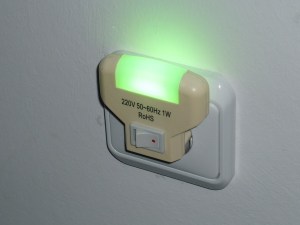
  • Pack a nightlight.  This will enhance safety and reduce disorientation if the PWA needs to get up at night in a strange home or hotel. (I put ours in bubble wrap.)
  • Load the PWA’s favorite music or audiobook onto a listening device with headphones for the flight.
  • If the PWA is apprehensive, remember that a calm voice and a soothing touch can help.  (If you are an anxious flyer, listen to a relaxation tape en route!)Headphones-Sennheiser-HD555
  • Bring ear plugs or noise-cancelling headphones for the PWA if the noise in the plane or hotel is likely to be bothersome.  I have found that Charles is hypersensitive to sound since his Alzheimer’s has progressed, but I’m not sure if that is true of other people.
  • Describe what is going to happen one step ahead, so you don’t overwhelm the PWA with details.  “In half an hour, we will land and change planes.”
  • Remind the PWA about using the airplane restroom prior to beginning descent (tactfully, of course: “We will be landing soon, so this might be a good time to use the restroom if you need to, honey.”
  • If you don’t have to catch a connecting flight, consider waiting until the plane has emptied out to start exiting, so that the PWA isn’t pressured to hurry.

postcard

  • Keep a travel diary by taking pictures and texting or emailing them to yourself with captions.  You can also cheat and use postcards – just jot down a sentence or two on the back.  When you get home, you can make a simple narrative about your trip with words and pictures to share with the PWA.  You will enjoy having these memories as well!